Zugarramurdi
Navarrese municipality in the Baztan-Bidasoa region and the Xareta Valley, characterized by its famous natural karst cave, Pyrenean rural architecture, and history linked to the 17th-century witch trials.
Step 1 of 2
The hosted destination on your domain: the ranking page ready to share, with your own votes.
A QR code that takes your audience to the ranking destination: made for TV, signage and screens.
The ranking embedded in an article on your site or app: your readers vote without leaving the page.
The hosted destination on your domain: the ranking page ready to share, with your own votes.
Allow voting
Your audience can vote for the participants in this ranking. It is independent of showing the vote count.
Show vote count
Each participant shows how many votes they have received, even if voting is turned off.
Show position
Each participant shows their position in the ranking. It does not change the list order.
What is the best village in Spain for a rural getaway in 2026?
Navarrese municipality in the Baztan-Bidasoa region and the Xareta Valley, characterized by its famous natural karst cave, Pyrenean rural architecture, and history linked to the 17th-century witch trials.

https://commons.wikimedia.org/wiki/File:Cocentaina_palau_ametller.JPGPublic domain
Monumental town in the north of the province of Alicante and capital of the El Comtat region, nestled at the foot of the Sierra de Mariola and distinguished by its Gothic-Renaissance Palace of the Counts and medieval quarter.
Coastal municipality in the Rías Altas, in the province of A Coruña, situated along its namesake ría and renowned for its rugged cliff landscapes, seafaring tradition, and proximity to San Andrés de Teixido.
A whitewashed mountain village in the Serranía de Ronda, in the Alto Genal region of the province of Málaga, surrounded by extensive chestnut forests and marked by its winding layout of Andalusi origin.
A village in the Alpujarra region of the province of Almería located on the southern slopes of Sierra Nevada, distinguished by its chestnut groves, iron-rich springs, and traditional stepped architecture.
A village in the province of Granada situated in the fertile plain of the Genil River, at the gateway to the Sierra Nevada massif, renowned for its river bridges, mountainous setting, and riverside hiking trails.

Priego de Córdoba (25992045644) (cropped)Konrad Hädener from Thun, SwitzerlandWikimedia CommonsCC-BY-2.0
Municipality in the south of the province of Córdoba nestled in the Sierras Subbéticas, renowned for its historic center of Baroque architecture, the labyrinthine neighborhood of La Villa, and its natural spring water fountains.
Municipality in the province of Jaén located in the Sierras de Cazorla, Segura y Las Villas Natural Park, characterized by its fortresses of Moorish origin, lush pine forests, and riverside trails.
Walled town in the province of Huelva situated along the course of the Tinto River, famous for its reddish rammed-earth Almohad walls, monumental gates, and the Castle of the Guzmanes.
Mountain town in the province of Huelva and the hub of the eponymous natural park, noted for the Gruta de las Maravillas, its hilltop Templar castle, and its surrounding dehesas.
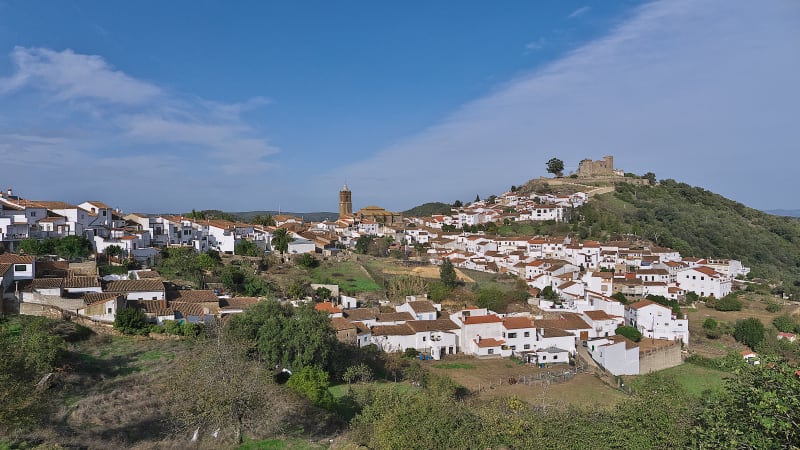
A mountain town in the province of Huelva nestled in the Sierra de Aracena y Picos de Aroche Natural Park, crowned by a 13th-century medieval fortress erected on the rocky summit overlooking the town.
Historic capital of the O Ribeiro region in the province of Ourense, located at the confluence of the Avia and Miño rivers, distinguished by its Jewish quarter, the ruins of the Sarmiento castle, and its deep-rooted winemaking culture.
A municipality in the province of Cáceres located on the banks of the Jerte River, designated as a historic site for its traditional architecture of timber-framed houses, chestnut-wood overhangs, and shaded alleyways.